
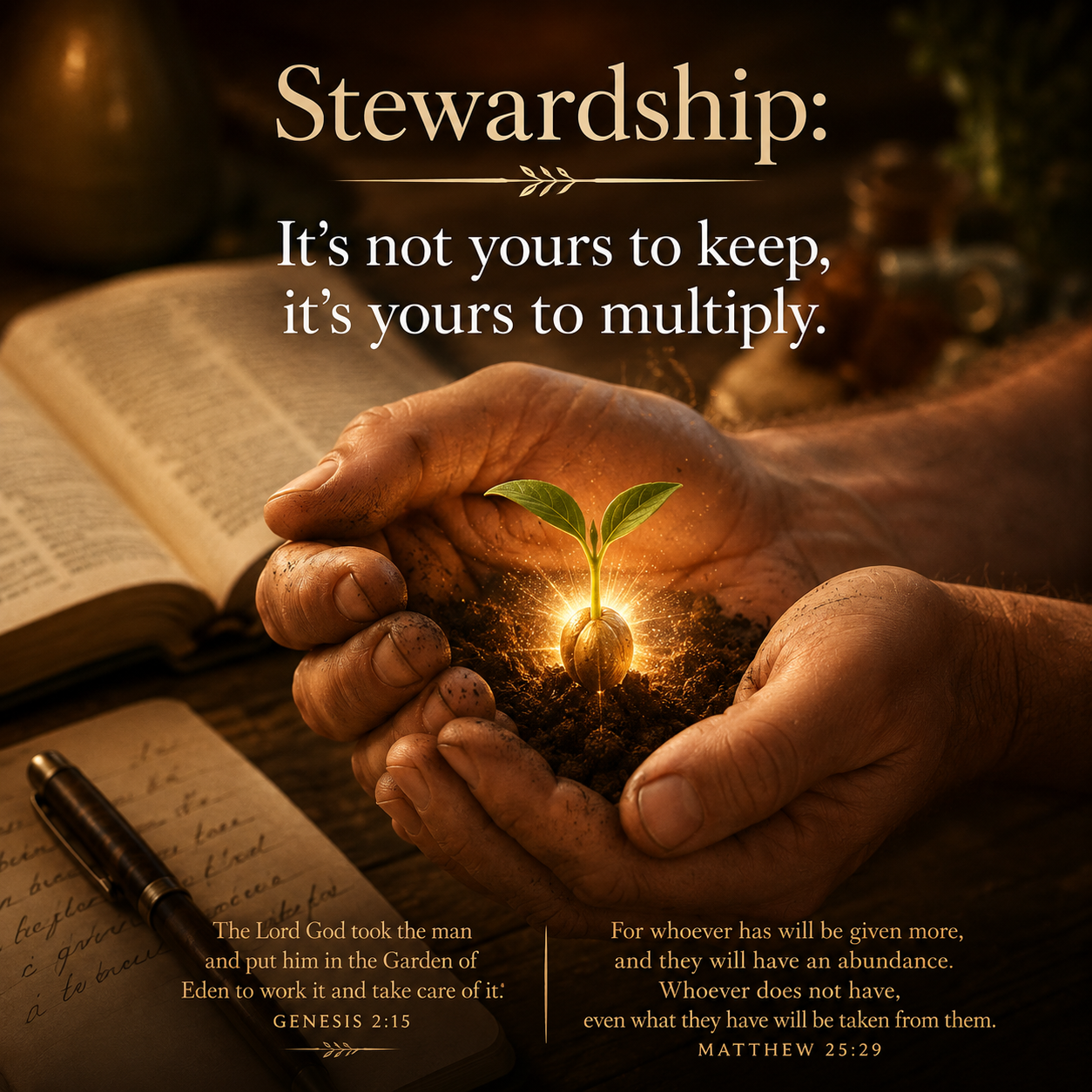
The Sacred Assignment: Understanding Your Role as a Steward
Faith, Leadership and Stewardship
We are all born with gifts, talents, opportunities, time and resources that have been entrusted to us by our Creator. As writers, leaders, parents, teachers and professionals, we have a responsibility to understand what it means to manage those gifts well.
This is the heart of biblical stewardship.
Stewardship means recognising that everything we have ultimately belongs to God and that we have been entrusted with the responsibility of managing it wisely.
As Psalm 24:1 declares:
“The earth is the Lord’s, and everything in it, the world, and all who live in it.”
When we understand that we are stewards rather than owners, our perspective begins to shift. Instead of asking, “What can I get?”, we begin asking:
“How can I best manage what God has entrusted to me?”
That change in perspective can transform the way we approach our gifts, careers, finances, relationships, opportunities and purpose.
What Is Biblical Stewardship?
Biblical stewardship is the responsibility of faithfully managing what God has placed in our hands.
It is not limited to money or possessions. We can steward our:
- Gifts and talents
- Time
- Knowledge
- Opportunities
- Finances
- Relationships
- Leadership
- Creativity
- Influence
- God-given ideas
For writers and creatives especially, stewardship means refusing to treat our gifts as insignificant. The ability to write, teach, speak, create or lead can become a powerful tool for making an impact when it is managed with wisdom and purpose.
Biblical Examples of Stewardship
The Bible is filled with examples that demonstrate the importance of faithful stewardship and the consequences of how we manage what has been entrusted to us.
The Original Assignment: Adam in the Garden
In Genesis 2:15, Adam was placed in the Garden of Eden to work it and take care of it.
Before there was a business, a ministry, a book or an organisation, there was an assignment to manage what God had already provided.
Adam was not the owner of the garden. He was its caretaker.
This establishes an important biblical principle: God can entrust something to us without transferring ownership of it to us.
The same principle applies today.
Whatever God has placed in your hands comes with a responsibility to manage it faithfully.
The Expectation of Increase: The Parable of the Talents
One of the clearest biblical teachings on stewardship can be found in the Parable of the Talents in Matthew 25:14–30.
A master entrusted different amounts of resources to three servants before leaving on a journey. Two servants used what they had been given and produced an increase. The third servant, however, buried his talent because of fear.
When the master returned, the servants were held accountable for what they had done with what they had received.
The lesson is powerful.
We are not simply called to keep our gifts. We are called to develop and use them wisely.
That means we should not hide our books, voices, ideas, talents or abilities because we are afraid of criticism, rejection or failure.
Fear can convince us to bury what God intended us to develop.
Faith calls us to put what we have been given to work.
Stewardship Requires Action
Having a gift is not the same as developing a gift.
An author may have a story inside them, but the manuscript still needs to be written.
A leader may have vision, but the vision still needs to be communicated and implemented.
A business owner may have an idea, but the idea still requires planning, investment and execution.
Stewardship requires action.
We honour the Giver when we take responsibility for developing what He has entrusted to us.
The Power of Divine Wisdom
Good stewardship requires more than knowledge. It requires wisdom and discernment.
James 1:5 reminds us:
“If any of you lacks wisdom, you should ask God, who gives generously to all without finding fault, and it will be given to you.”
There will be moments when we do not know what decision to make, which opportunity to accept, which relationship to pursue or how to manage the resources in our hands.
This is why prayer and divine wisdom are essential to effective stewardship.
Proverbs 3:14–15 reminds us of the value of wisdom, describing it as more profitable than silver and more precious than rubies.
When we build on a foundation of wisdom, what we create has the potential to become a lasting legacy.
Wisdom helps us think beyond what benefits us today and consider what our decisions could mean for the people and generations that come after us.
Stewardship and Leaving a Legacy
Faithful stewardship is not simply about what we accomplish during our lifetime.
It is also about what remains after us.
The books we write, the people we mentor, the businesses we build, the knowledge we share and the examples we set can influence people long after we are gone.
This is why stewarding your God-given gifts matters.
Your gift may be personal, but its impact does not have to stop with you.
When you develop what God has placed in you and use it with wisdom, your work can become part of a legacy that benefits others.
Lessons from the Shrewd Manager
One of the Bible’s most complex teachings about stewardship appears in the Parable of the Unjust Steward in Luke 16:1–13.
A manager is accused of wasting his master’s resources. When he realises that his position is coming to an end, he acts shrewdly to prepare for his future.
The master’s response is surprising.
The manager is not commended for his dishonesty. Instead, the story highlights his foresight and shrewdness.
There is an important lesson here about how we use the resources available to us.
As children of God, we should be intentional about how we use our time, finances, influence and opportunities. Temporary resources can be used for eternal purposes.
We should not be careless with what has been entrusted to us.
Ultimately, each of us will have to give an account of how we managed what was placed in our hands.
How to Become a Better Steward
So what does faithful stewardship look like in everyday life?
1. Recognise What Has Been Entrusted to You
Take inventory of your gifts, skills, resources, relationships, opportunities and responsibilities.
You cannot manage something well if you have never recognised its value.
2. Develop Your Gifts
Do not bury your abilities.
Learn. Practise. Seek mentorship. Invest in your development and continue improving what God has placed within you.
3. Seek God’s Wisdom
Not every opportunity is the right opportunity.
Ask God for wisdom and discernment before making decisions about your time, resources, relationships and assignments.
4. Use What You Have for Purpose
You may not have everything you want, but you can begin with what you already have.
Stewardship begins with what is currently in your hands.
5. Think Beyond Yourself
Ask yourself how your gifts can benefit other people.
A God-given gift is not only about personal achievement. It can become a source of encouragement, knowledge, opportunity and transformation for others.
6. Remain Faithful in Small Things
Great responsibility often begins with small assignments.
Do not despise the small beginnings. Faithfulness in the things that appear insignificant can prepare you for greater responsibility.
Serving One Master
At the heart of stewardship is loyalty.
Jesus says in Luke 16:13:
“No servant can serve two masters… You cannot serve both God and money.”
Whether you are a parent, teacher, pastor, entrepreneur, author or leader, you have been entrusted with influence.
You are a steward.
That means being intentional about the advice you receive, the company you keep and the way you use your God-given ideas, talents and opportunities.
Our gifts are not simply for personal recognition. They can be used to build God’s Kingdom and serve others.
Be passionate. Be courageous. Be diligent.
Most importantly, be faithful.
When you demonstrate that you can faithfully manage what has been placed in your hands, you position yourself to receive greater responsibility.
Your gift is an assignment. Your resources are a trust. Your influence is a responsibility. Steward them well.